Tsunami — what to do when you see the signs or get a warning
A tsunami is a series of enormous ocean waves caused by earthquakes, underwater landslides, volcanic eruptions or asteroids. Leave as soon as you see any natural signs of a tsunami or receive an official tsunami warning — do not wait. What to have: Evacuation routes to high ground from home, work and play, a family emergency communication plan with an out-of-state contact · a place to meet if separated, a radio for emergency alerts, emergency phone numbers saved and more. From the official Ready.gov (FEMA) guidance.
Tsunami — when you see the signs or get a warning
A tsunami is a series of enormous ocean waves caused by earthquakes, underwater landslides, volcanic eruptions or asteroids. Leave as soon as you see any natural signs of a tsunami or receive an official tsunami warning — do not wait.
What to have
Before
- Learn the signs of a potential tsunami, such as an earthquake, a loud roar from the ocean, or a sudden rise or wall of water or sudden draining of water showing the ocean floor.
- Pick shelters 100 feet or more above sea level, or at least one mile inland.
When you see the signs or get a warning
- If caused by an earthquake, Drop, Cover, then Hold On to protect yourself from the earthquake first.
- When the shaking stops, move immediately to a safe place as high and as far inland as possible — do not wait for tsunami warnings and evacuation orders.
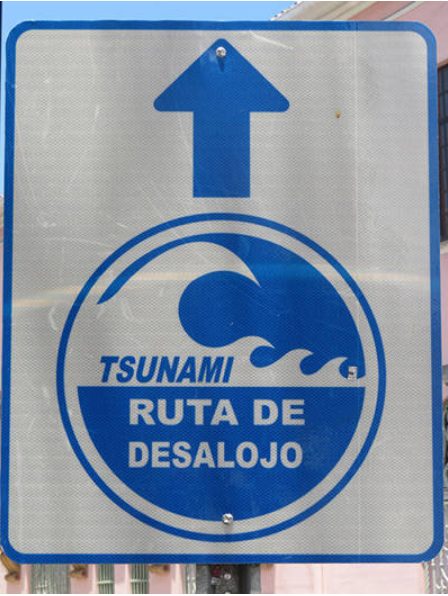
- Evacuation routes often are marked by a wave with an arrow in the direction of higher ground.
- If you are in the water, grab onto something that floats, such as a raft or tree trunk. If you are in a boat, face the direction of the waves and head out to sea; if in a harbor, go inland.
- If you are outside of the tsunami hazard zone and receive a warning, stay where you are unless officials tell you otherwise.
After
- Listen to local alerts and authorities for information on areas to avoid and shelter locations.
- Avoid wading in floodwater — water may be deeper than it appears, and downed power lines can electrically charge it.
- Stay away from damaged buildings, roads and bridges. Use text messages or social media to communicate with family and friends.
Source: Ready.gov · FEMA — Tsunamis
Get disaster alertsEarthquakes, tsunamis and volcanoes, sent to your phone when observed. No sign-up, no fee.
About disaster alerts →FAQ
How should I prepare for a tsunami?
Evacuation routes to high ground from home, work and play; A family emergency communication plan with an out-of-state contact · a place to meet if separated; A radio for emergency alerts (NOAA Weather Radio) · your community's warning system; Emergency phone numbers saved.
Tsunami — What should I do beforehand?
Learn the signs of a potential tsunami, such as an earthquake, a loud roar from the ocean, or a sudden rise or wall of water or sudden draining of water showing the ocean floor. Pick shelters 100 feet or more above sea level, or at least one mile inland.
Tsunami — What should I do when I see the signs or get a warning?
If caused by an earthquake, Drop, Cover, then Hold On to protect yourself from the earthquake first. When the shaking stops, move immediately to a safe place as high and as far inland as possible — do not wait for tsunami warnings and evacuation orders. Evacuation routes often are marked by a wave with an arrow in the direction of higher ground. If you are in the water, grab onto something that floats, such as a raft or tree trunk. If you are in a boat, face the direction of the waves and head out to sea; if in a harbor, go inland. If you are outside of the tsunami hazard zone and receive a warning, stay where you are unless officials tell you otherwise.
Tsunami — What should I do afterwards?
Listen to local alerts and authorities for information on areas to avoid and shelter locations. Avoid wading in floodwater — water may be deeper than it appears, and downed power lines can electrically charge it. Stay away from damaged buildings, roads and bridges. Use text messages or social media to communicate with family and friends.
See every situation on one page at Supplies & what to do, including how long each government advises keeping emergency supplies.
More
Not a forecast — these are events that have already been recorded. For travel safety, check your government's official travel advisory. Open the world disaster map →