Chemical or biological attack or release — evacuate, shelter in place, decontaminate
Chemical agents are poisonous vapors, aerosols, liquids and solids that have toxic effects on people, animals or plants; biological agents can be spread when sprayed into the air, by contact, or when food and water are contaminated. Some toxic chemicals are odorless. What to have: An emergency supply kit, duct tape, scissors and plastic to cover doors, windows and vents, cotton fabric to cover your mouth and nose, a plastic bag to seal contaminated clothing in, soap and water and more. From the official Ready.gov (FEMA) guidance.
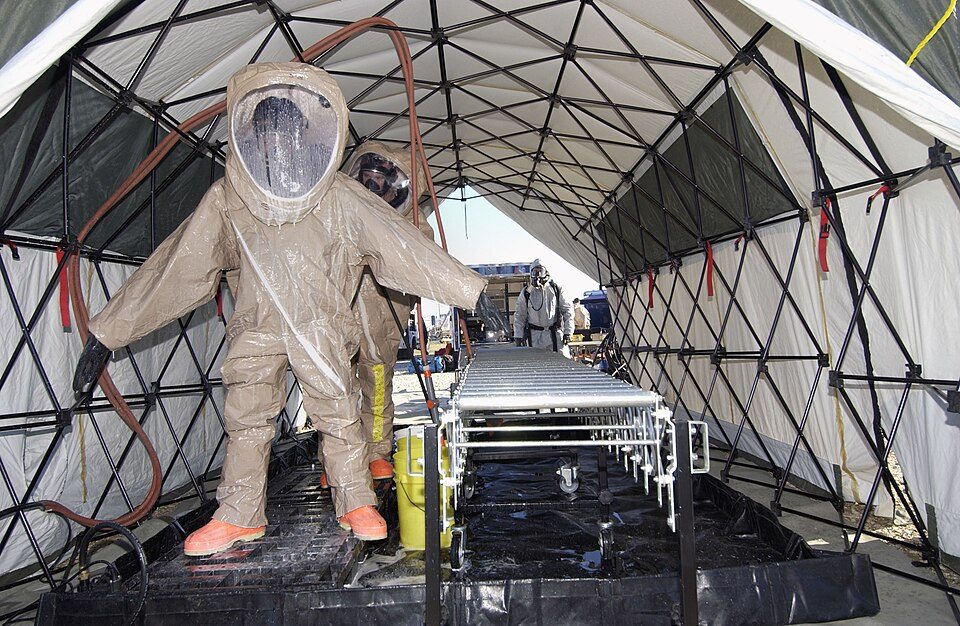
Chemical or biological attack or release — evacuate, shelter in place, decontaminate
Chemical agents are poisonous vapors, aerosols, liquids and solids that have toxic effects on people, animals or plants; biological agents can be spread when sprayed into the air, by contact, or when food and water are contaminated. Some toxic chemicals are odorless.
What to have
Before
- Know how to operate your home's ventilation system.
- Identify an above-ground shelter room with as few openings as possible.
- Check with your doctor to make sure everyone in your family has up-to-date immunizations.
If asked to evacuate
- Do so immediately. If the chemical is inside your building, get out without passing through the contaminated area, if possible.
- If outside, move away immediately in a direction upwind of the source. If in a car, keep windows and vents closed and shut off the air conditioner and heater.
- Quickly get away from the area if you notice a suspicious substance.
If told to shelter in place
- Bring pets inside and go to an internal room. Close and lock all exterior doors and windows; close vents and fireplace dampers.
- Turn off air conditioners and ventilation systems, or set them to 100 percent recirculation.
- Seal the room with duct tape and plastic sheeting — doors, windows, air conditioning units, and bathroom and kitchen exhaust fans.
- Take shallow breaths through a cloth or a towel if gas or vapors could have entered the building.
- Avoid eating or drinking any food or water that may be contaminated.
- Do not leave the shelter to go outdoors, including to help others, until authorities say it is safe.
If exposed
- Remove all clothing and other items in contact with your body and seal them in a plastic bag. Cut off clothing normally removed over the head to avoid contact with the eyes, nose and mouth.
- Flush eyes with water, then wash face, hair and body with soap and water and put on clean clothes.
- For a biological agent, cover your mouth and nose with layers of fabric, contact authorities and seek medical assistance. Avoid crowds and wash your hands frequently.
- As soon as it is safe to do so, proceed to a medical facility for screening and treatment.
Source: Ready.gov · FEMA — Chemical Emergencies · Ready.gov · FEMA — Bioterrorism
Get disaster alertsEarthquakes, tsunamis and volcanoes, sent to your phone when observed. No sign-up, no fee.
About disaster alerts →FAQ
What supplies do I need for a chemical or biological attack?
An emergency supply kit; Duct tape, scissors and plastic to cover doors, windows and vents; Cotton fabric to cover your mouth and nose (t-shirt, handkerchief, towel) · a face mask; A plastic bag to seal contaminated clothing in; Soap and water; A family emergency plan.
Chemical or biological attack — What should I do beforehand?
Know how to operate your home's ventilation system. Identify an above-ground shelter room with as few openings as possible. Check with your doctor to make sure everyone in your family has up-to-date immunizations.
Chemical or biological attack — What should I do if asked to evacuate?
Do so immediately. If the chemical is inside your building, get out without passing through the contaminated area, if possible. If outside, move away immediately in a direction upwind of the source. If in a car, keep windows and vents closed and shut off the air conditioner and heater. Quickly get away from the area if you notice a suspicious substance.
Chemical or biological attack — What should I do if told to shelter in place?
Bring pets inside and go to an internal room. Close and lock all exterior doors and windows; close vents and fireplace dampers. Turn off air conditioners and ventilation systems, or set them to 100 percent recirculation. Seal the room with duct tape and plastic sheeting — doors, windows, air conditioning units, and bathroom and kitchen exhaust fans. Take shallow breaths through a cloth or a towel if gas or vapors could have entered the building. Avoid eating or drinking any food or water that may be contaminated. Do not leave the shelter to go outdoors, including to help others, until authorities say it is safe.
Chemical or biological attack — What should I do if I was exposed?
Remove all clothing and other items in contact with your body and seal them in a plastic bag. Cut off clothing normally removed over the head to avoid contact with the eyes, nose and mouth. Flush eyes with water, then wash face, hair and body with soap and water and put on clean clothes. For a biological agent, cover your mouth and nose with layers of fabric, contact authorities and seek medical assistance. Avoid crowds and wash your hands frequently. As soon as it is safe to do so, proceed to a medical facility for screening and treatment.
See every situation on one page at Supplies & what to do, including how long each government advises keeping emergency supplies.
More
Not a forecast — these are events that have already been recorded. For travel safety, check your government's official travel advisory. Open the world disaster map →